
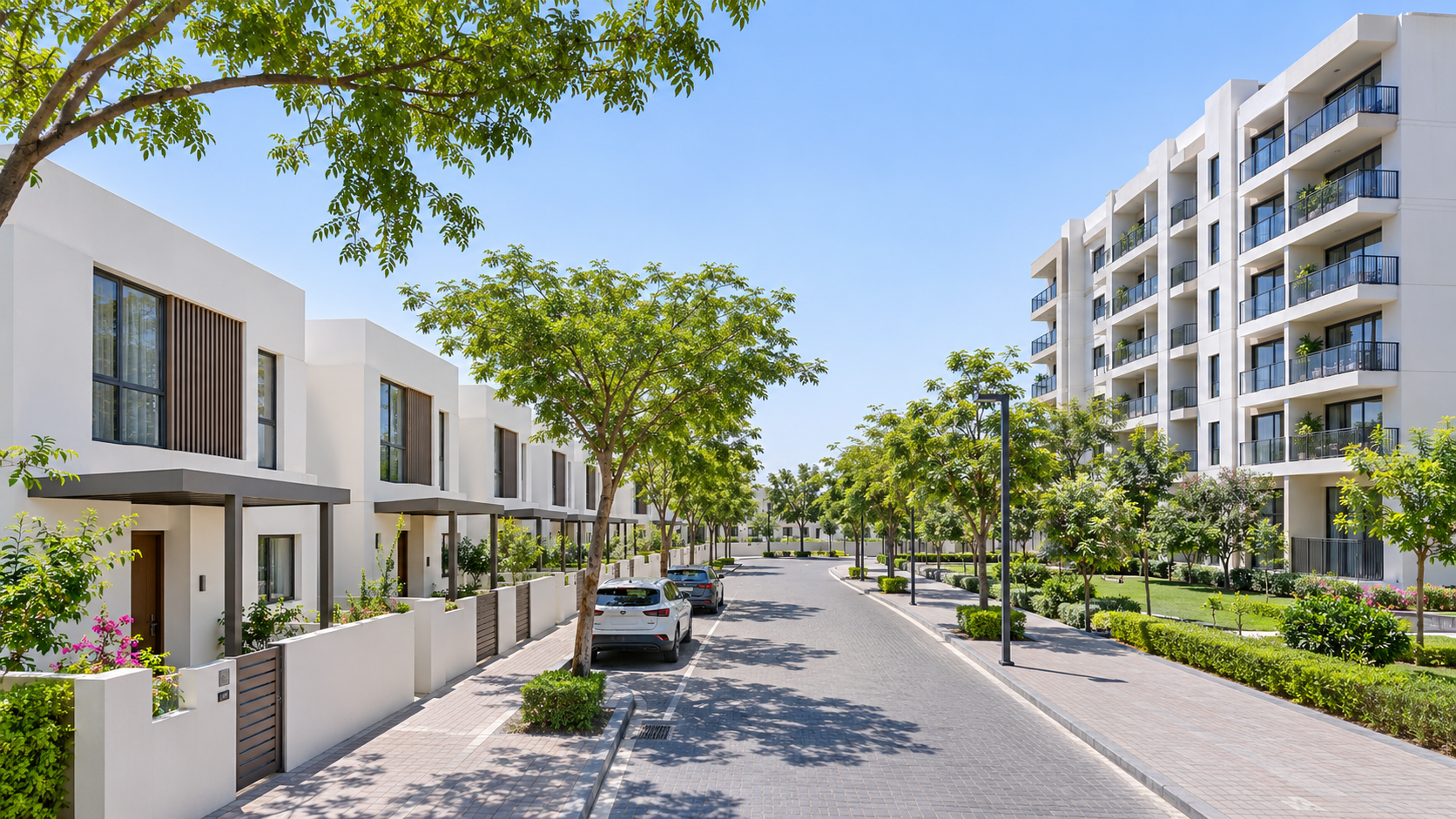
An apartment and a townhouse can suit the same household for different reasons. Compare the actual homes and communities rather than assuming one property type always offers more space, lower bills or an easier routine. A useful shortlist starts with how your household lives on an ordinary working day.
Measure space you can use
Ask what the advertised area includes and distinguish it from usable rooms and any area used to calculate charges. A larger headline figure may include spaces that do little for your furniture, storage or daily activities.
Measure important rooms and mark where doors open. Can your dining chairs pull out comfortably? Is there room for a desk without blocking circulation? Check cupboard depth, laundry space and storage for suitcases, cleaning equipment and children’s belongings.
Trace the route for large furniture from the delivery vehicle to its final position. Lift dimensions, corners, doorways and stairs can matter as much as the room itself.
Walk through your daily routine
Carry an imaginary grocery load from the parking space to the kitchen. Consider lift access, entrance steps and internal stairs, especially for young children, older relatives or anyone with mobility needs.
Bedrooms on different floors may suit some households and complicate others. Check bathroom access and whether a useful room could accommodate changing needs. Visit living rooms and bedrooms to listen for traffic, neighbours and mechanical equipment, including air-conditioning units. Party walls and room positions deserve attention in either property type.
Ask which outdoor areas are private, shared or subject to particular use restrictions. Establish who maintains them and what changes need permission. Look at summer shade and the practical effort of maintaining planting, terraces or outdoor furniture.
Test the location at useful times
Visit around realistic school and work travel periods. Try the journey from the actual entrance rather than relying on a map pin for the wider community. Consider school drop-off, evening access and the return journey as well as the morning departure.
Distinguish existing transport from proposed connections shown in marketing. For Dubai journeys, use RTA’s current travel information when planning a route. Check parking-space dimensions, visitor arrangements, address visibility and where deliveries or taxis can stop.
Ask which internet and service-provider accounts are available for the exact address. Do not assume a connection available elsewhere in the community serves your chosen home on the same terms.
Compare renters’ annual household costs
The following figures are hypothetical annual inputs for two rental options. They are not typical rents or charges. The maintenance allowances assume the tenant has agreed those responsibilities; tenants do not automatically pay every repair cost.
| Annual household item | Apartment | Townhouse |
|---|---|---|
| Rent | AED 120,000 | AED 130,000 |
| Utilities and cooling | AED 14,000 | AED 20,000 |
| Separately paid parking | AED 1,800 | AED 0 |
| Garden care | AED 0 | AED 3,000 |
| Tenant-agreed maintenance allowance | AED 1,200 | AED 2,000 |
| Total | AED 137,000 | AED 155,000 |
In this illustration, the townhouse costs AED 18,000 more annually. Zero entries mean no separate amount is assumed for that example. Actual rent inclusions and contractual repair obligations could reverse the result.
The table excludes deposits, signing and setup costs, internet, other charges, municipal assessments, financing and owner service charges. Compare utility estimates at similar occupancy and usage, and avoid counting cooling twice. Ask how each specific unit is billed. Our DEWA and district-cooling guide explains questions to ask in Dubai.
Buyers need a separate ownership budget
Request service or community-charge statements and ask what they cover, which area is chargeable and what the current approved budget includes. Clarify responsibility for repairs and any applicable reserve arrangements, external air-conditioning equipment, roofs or other shared elements.
For Dubai, the DLD Service Charge Index provides RERA-approved jointly owned property fees by project, use and year. Consult the applicable management or authority in other emirates.
Do not assume every townhouse is free of community charges or that a current figure guarantees future costs. Compare the actual ownership arrangements. Our rent-or-buy budget guide helps connect these costs with the wider decision.
Questions to take to the next visit
Ask: Where will everyday items go? Who maintains the outdoor space? Which bills are included? Can everyone use the home comfortably? What does the journey feel like at the times you actually travel?
Before choosing:
- Measure usable rooms, storage and furniture routes.
- Walk parking, lift and stair access.
- Check noise, shade and outdoor responsibilities.
- Test travel and confirm address-specific services.
- Compare written rent inclusions or ownership charges.
Contact GoldPrestige to shortlist homes around your household’s space, travel and budget priorities.